Español
  Deutsch
  Français
  Nederlands
Why a gradual transition is so important
A dog’s intestines contain a complex balance of bacteria that aid in digestion. When there is an abrupt change in dog food this system won’t have a chance to adjust. As a result, digestion may become temporarily unbalanced. By making the switch gradually, the body can adapt, and symptoms usually remain mild and short-lived. This is especially true for dogs with sensitive stomachs or stress-sensitive intestines.
7 to 10 days of rest and recovery
A clear schedule provides guidance and prevents the transition from happening too quickly for your dog. The schedule below is suitable for most dogs. For very sensitive dogs, each step can be extended slightly. Feel free to contact us with our specialists for personalized advice!
- Days 1 and 2: 75 percent of the old food and 25 percent of the new food
- Days 3 and 4: 50 percent old and 50 percent new
- Days 5 and 6: 25 percent old and 75 percent new
- Days 7 through 10: Complete transition to the new diet
During this period, it’s important not to make any other changes to your diet (such as eating more or fewer snacks (to provide). This way, it remains clear where any responses are coming from.
What’s normal during a layover (and what isn’t)?
A slight change in stool consistency—slightly softer or, conversely, a bit less frequent—is common during the first few days. The odor may also change temporarily. These are normal signs that the body is adjusting. If your dog continues to eat well and remains alert and energetic, there’s usually no cause for concern.
If symptoms worsen—such as persistent diarrhea, vomiting, or obvious lethargy—it’s a good idea to take a step back in the feeding schedule. If the symptoms persist after that, it’s time to contact a veterinarian.
So, learn to recognize the signs that are—and aren’t—related to switching dog food. It’s good for you—and for your four-legged friend!
Practical Tips for Common Situations
Picky Eaters
Some dogs are hesitant to try new flavors. Carefully mix the new food into the old food and keep mealtime calm. Adding extra treats often makes it harder, because your dog will learn to wait for something else. And you want to avoid that.
Dogs that eat too fast
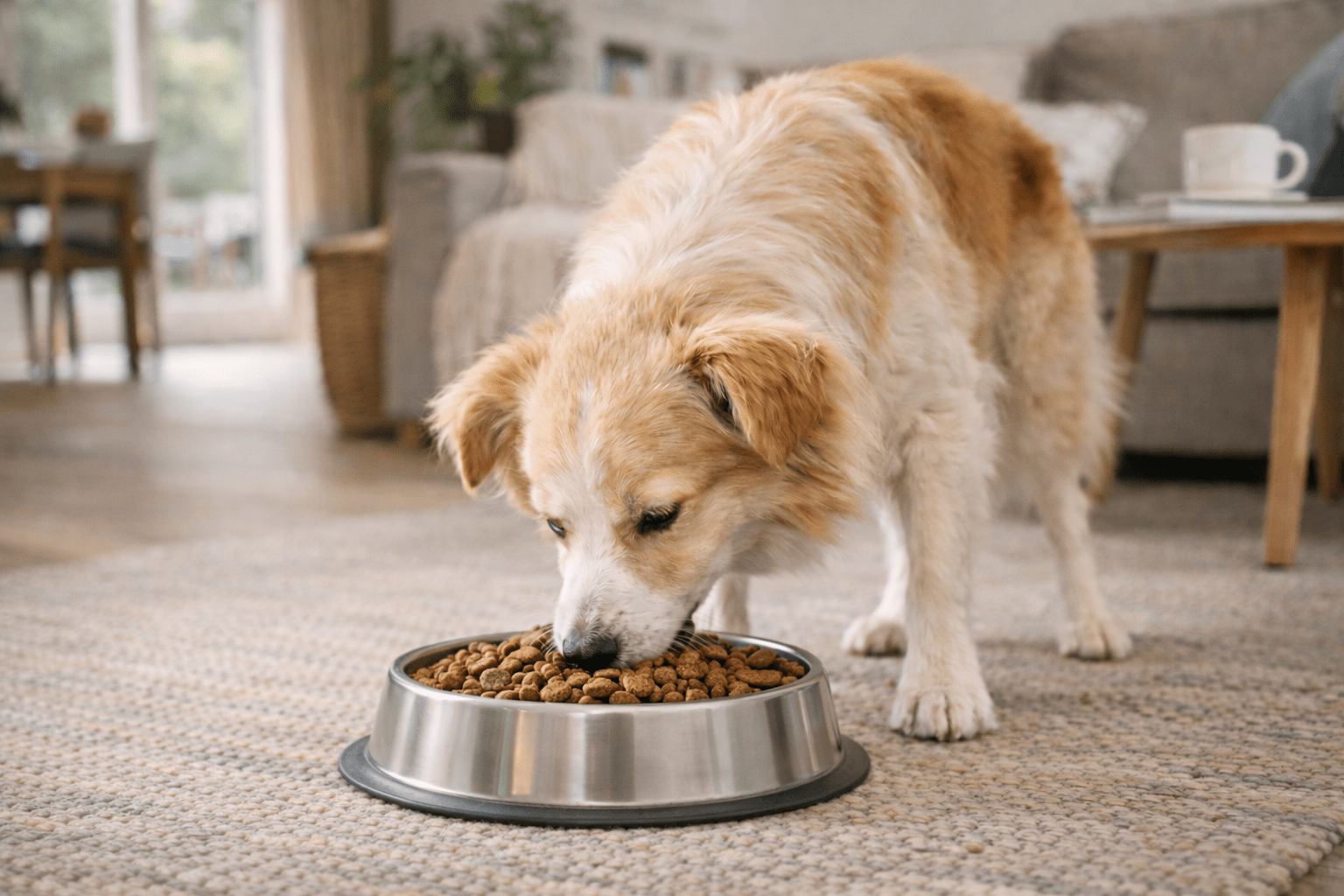
When switching foods, it’s especially important for your dog to eat slowly. You may want to use a slow-feeder bowl to avoid putting unnecessary strain on your dog’s digestive system. This also helps you better assess how your dog is responding to the new food, such as hypoallergenic dog food.
Stress-Sensitive Gut
Dogs that react quickly to stimuli benefit from predictability. Feed them at set times and avoid distractions around mealtime. If you know your dog is easily distracted, it’s better to phase in the change over 9 or 10 days rather than 7.
When will you see the results of the new diet?
Many dog owners expect to see a noticeable difference within a few days. Sometimes that happens, but more often than not, the body needs a little more time. Minor improvements in stool consistency or appetite are often noticeable within two to three weeks. Changes in coat, energy levels, and overall well-being usually become apparent only after four to six weeks.
Continue to monitor your pet during this period and don’t change its diet again too soon. Patience plays a major role in a successful transition.
Make the switch extra stable
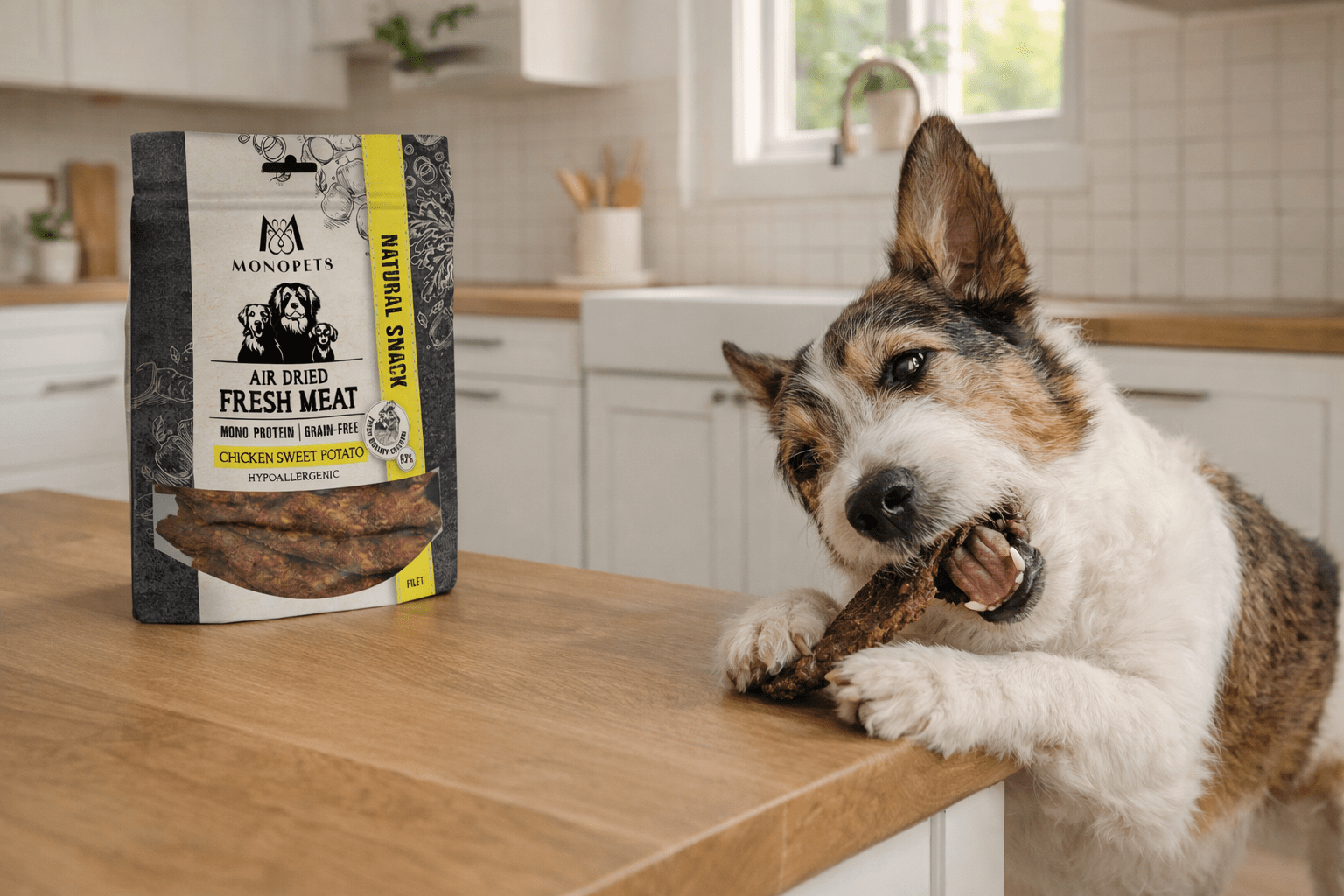
During the transition, it’s a good idea to use rewards such as sausage or to keep other snacks as simple as possible for the time being. By simplifying them and aligning them with the new diet, you prevent the body from receiving multiple stimuli at once. This increases the likelihood of a smooth transition and makes the effects of the new diet more apparent.
Make the Switch with Confidence
A successful transition starts with calmness, a clear plan, and realistic expectations. By taking it step by step and paying close attention to your dog’s cues, you’ll maximize your chances of success.
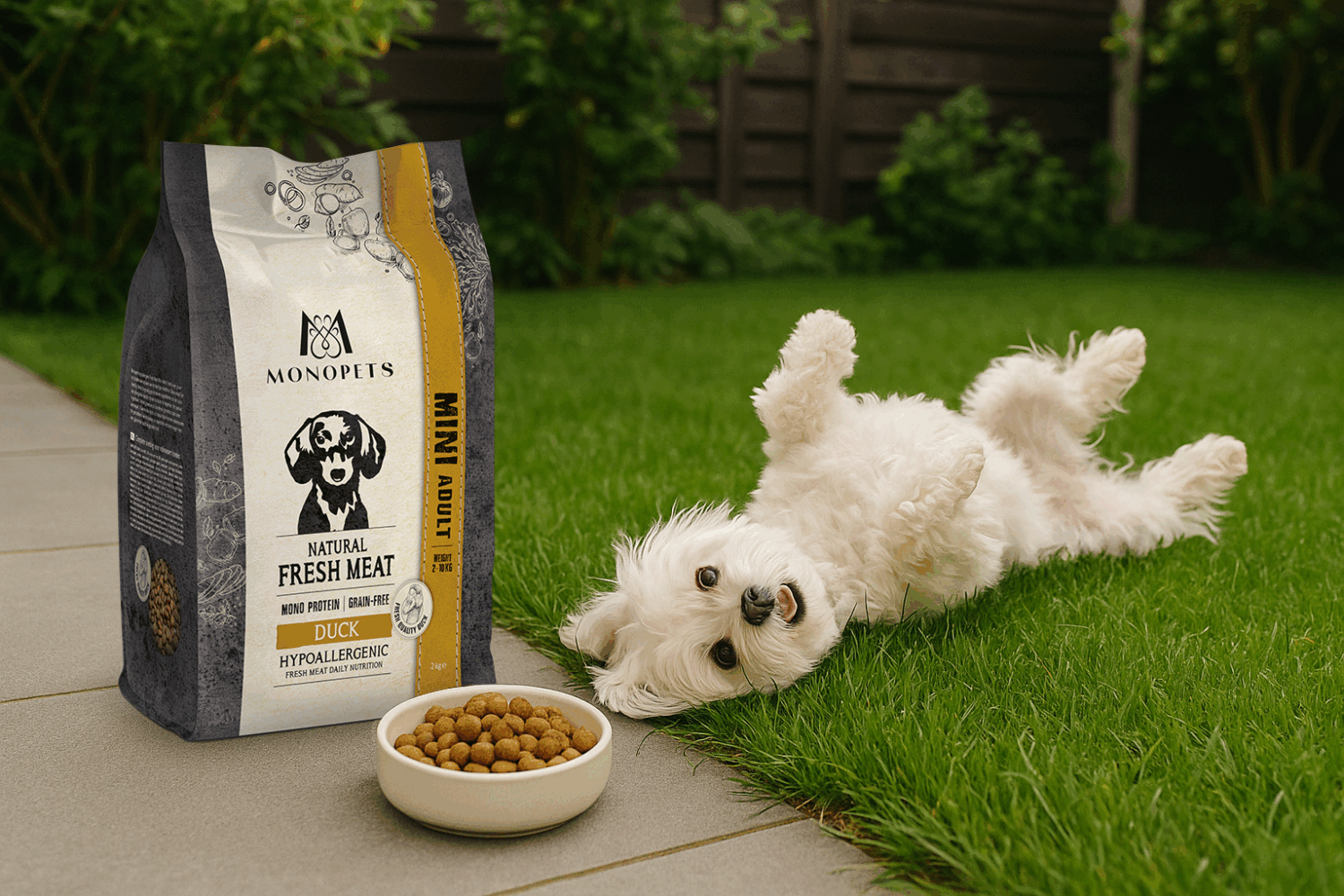
Do you want to make sure your dog switches to healthy dog food with only one (animal) protein source? Then Monopets is the right place for you! Our food is developed in collaboration with veterinarians and experts who know exactly what’s best for your dog. Do you have any questions? Feel free to contact us for personalized advice!
 Veterinary diet

 Medium dog (11 - 32 kg)
 Large dog (> 33 kg)


 Small dog (2 - 10 kg)
  Daily food