Español
  Deutsch
  Français
  Nederlands
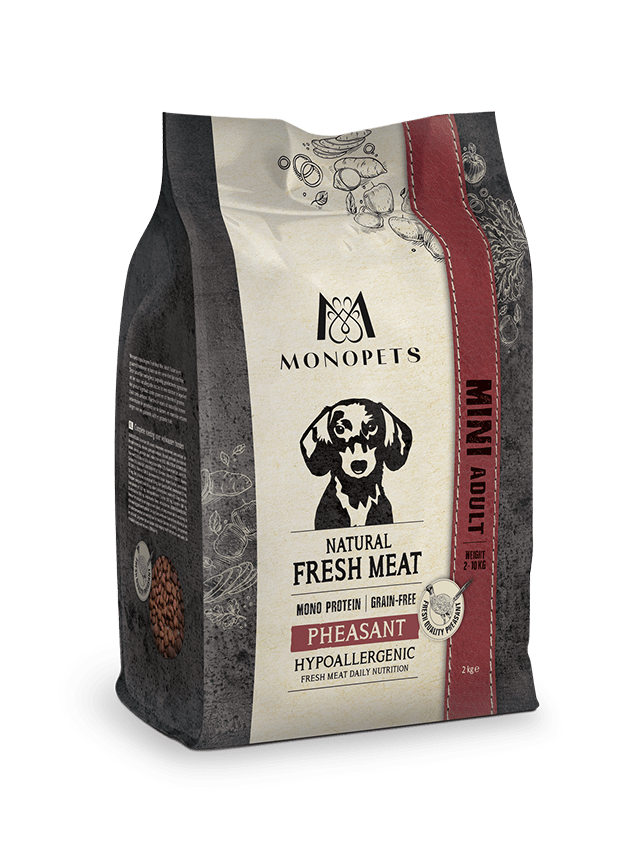
A crazy idea, but a smart dietary choice!
A few years ago, if you brought up the topic of insects in dog food, you’d probably have been met with puzzled looks. After all, dogs eat chicken, beef, lamb, or fish, don’t they? Those are the flavors we’re familiar with and the ones listed on many packages. Yet that perception is slowly changing.
More and more dog owners are taking a closer look at the ingredients. Many standard dog foods contain multiple sources of animal protein. Chicken, beef, pork, or fish may be mixed together, sometimes listed under broad terms that don’t really tell you much as a dog owner.
For a dog with a strong stomach, this doesn’t have to be a problem. But for dogs that are prone to itching, irregular stools, gas, or an upset stomach, such a broad range of ingredients can make it difficult to pinpoint the cause. That’s why there’s growing interest in clear, less commonly used protein sources. And that’s where insects come into the picture.
Why Insect Is Interesting for Sensitive Dogs
Insects as a source of protein are relatively new for many dogs. This may be of interest to dogs that are sensitive to common proteins such as chicken or beef. Not because dog food containing insects doesn’t automatically solve every problem, but because it makes the diet easier to manage.
At hypoallergenic dog food It often comes down to exactly that principle: fewer irritants, more clarity. You choose a diet where the protein source is clear and where unnecessary additives are avoided as much as possible. This gives your dog’s body a break and makes it easier for you to track what he responds well to.
That doesn’t make insects exciting or strange—it makes them practical. It’s a good fit for pet owners who want to feed their pets more thoughtfully and don’t want to keep switching back and forth between flavors and brands.
What makes insects such a practical source of protein?
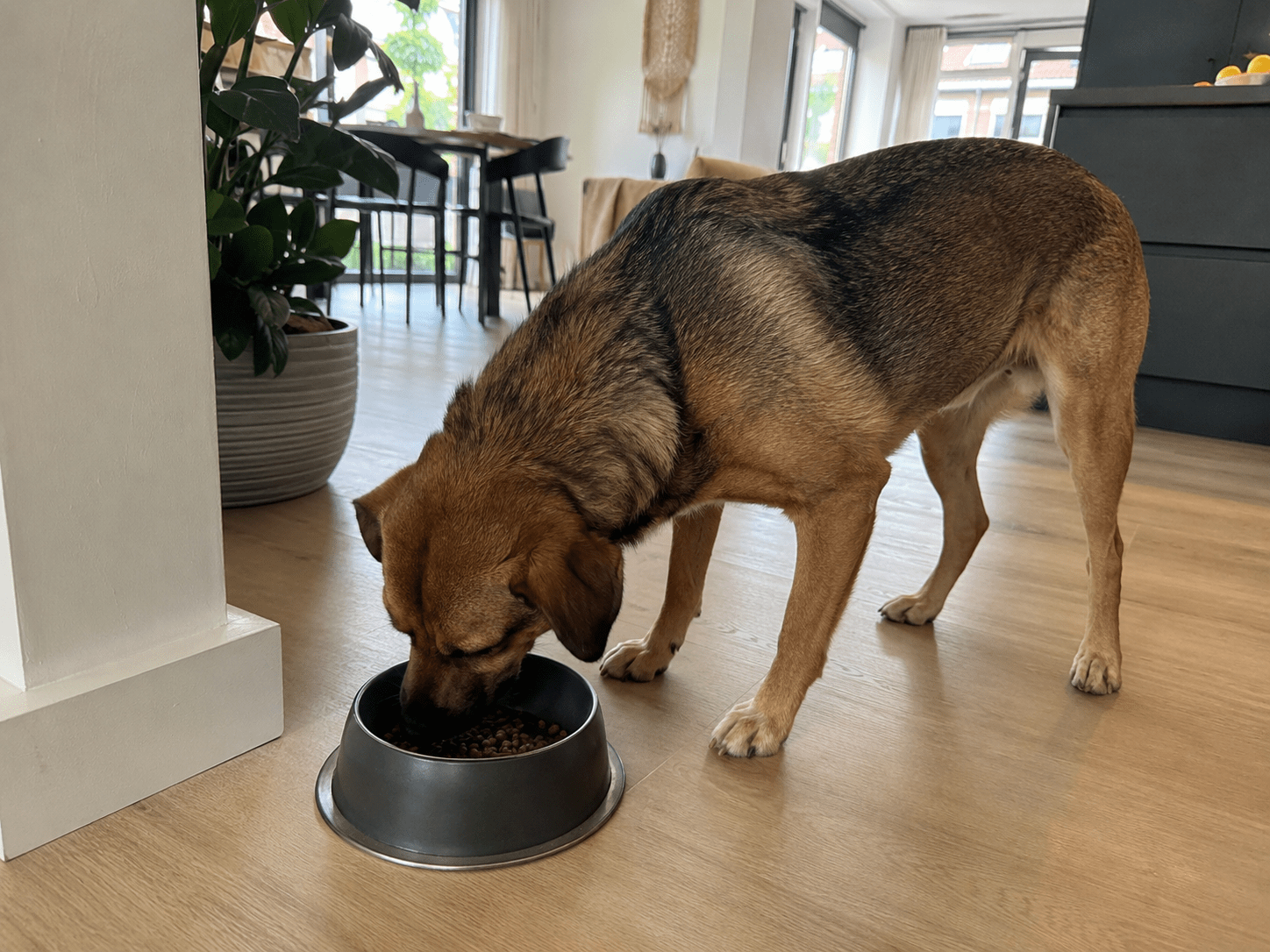
Dogs need nutrients that are easily digestible and suited to their bodies. No matter how attractive the packaging may be, what ultimately matters is how your dog responds to it. Is he eating well, are his stools consistent, is his coat healthy, and does he have enough energy? These can all be signs that your dog is having trouble with his current food.
When used in a well-formulated recipe, insect protein can help keep the base simple, especially when combined with carefully selected ingredients.
When choosing dog food containing insects, pay attention to the following, among other things:
- A single, clear source of protein without unnecessary additives
- A formula tailored to your dog’s age and size
- Ingredients that do not place an unnecessary burden on the digestive system
- A smooth transition, especially for sensitive dogs
- Snacks that complement the main meals
That last point is often overlooked. If you feed your dog insect-based kibble but give it all kinds of snacks containing chicken, beef, and lamb in between meals, it can still be difficult to keep track of everything.
It’s not just the protein source that matters
Insects are interesting, but they aren’t the only thing you should pay attention to. Good nutrition is always about the big picture. A kibble containing insects may still be less suitable if it contains a lot of unnecessary fillers or unclear ingredients.
That’s why many pet owners are also looking into grain-free dog food. Not because grains are necessarily bad for every dog, but because some dogs respond better to a formula without wheat or other grains. Simplicity can certainly help, especially for dogs with sensitive digestive systems.
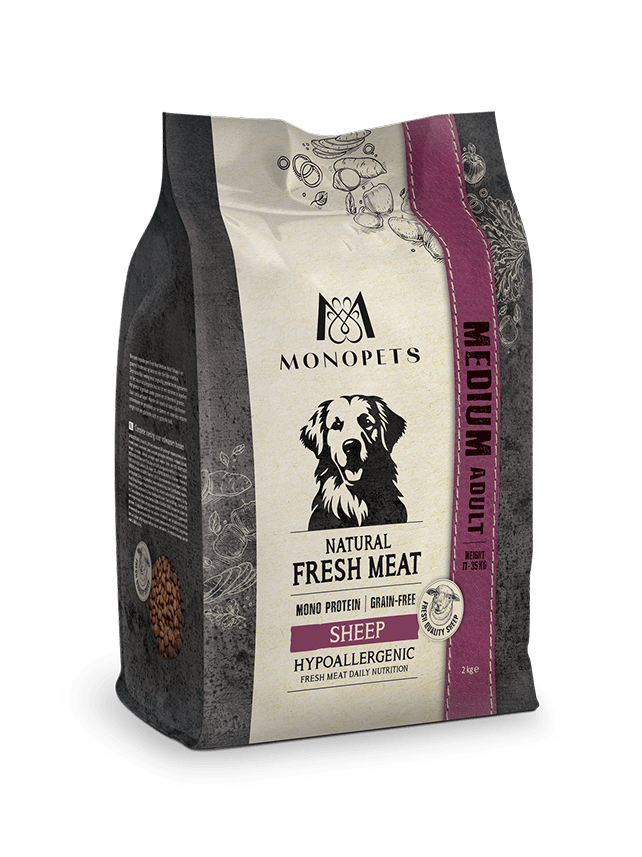
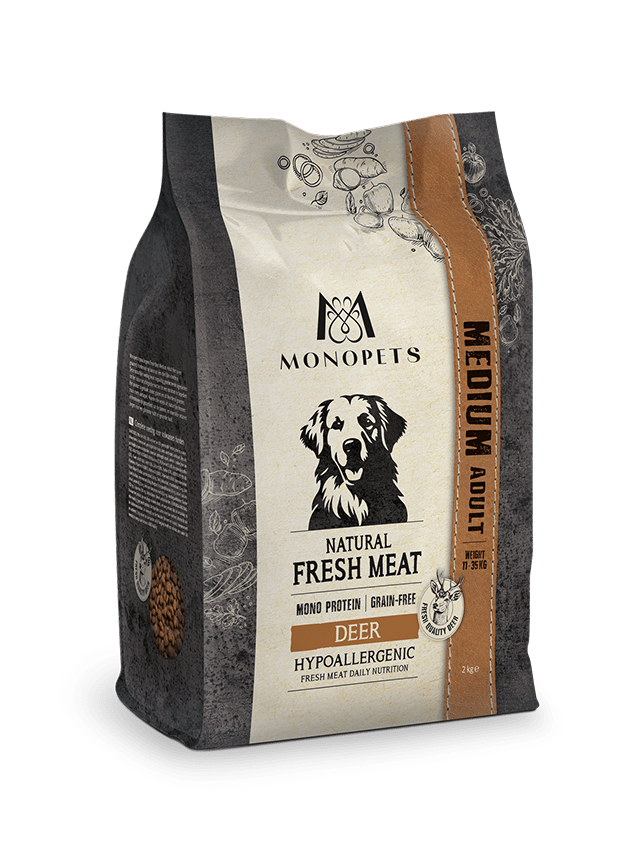
The dog’s size is also a factor. For example, if you’re looking for Food for medium-sized dogs, you’ll want to consider not only the flavor, but also the kibble size, energy requirements, and digestibility.
Even healthy dog treats can make a difference
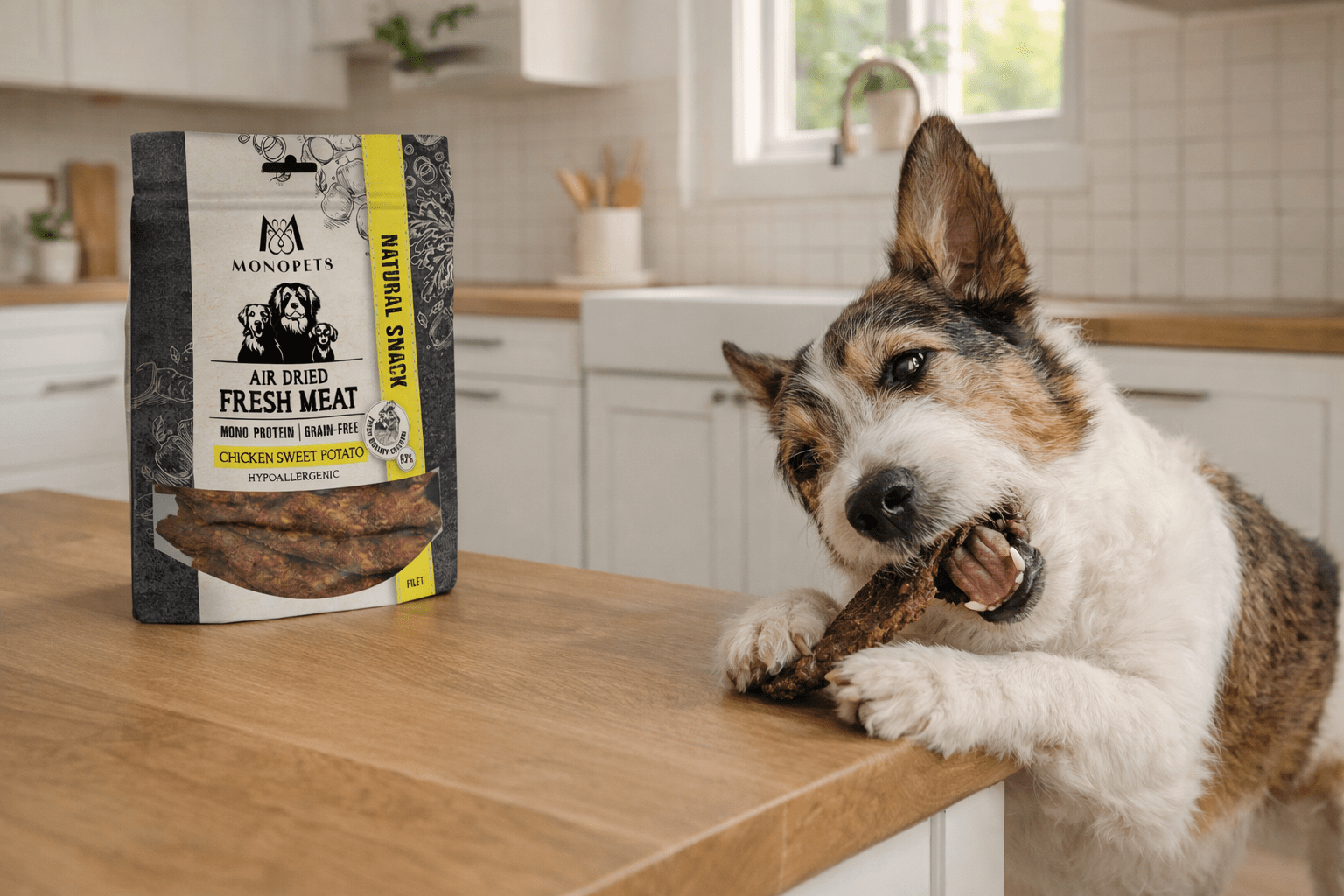
A common mistake is that pet owners carefully choose their dog’s main food but forget about treats. Yet treats are something you give every day—whether during walks, training sessions, or just because your dog gives you that sweet look.
If you consciously choose a mild protein source for a meal, be sure to extend that same approach to healthy dog treats. That doesn’t mean your dog can’t have any treats anymore. It just means that when it comes to treats, you should also look for simplicity, recognizable ingredients, and consistency with the rest of their diet.
This way, you can prevent your dog from getting all the different proteins and additives mixed up. This can make things much clearer, especially for dogs with sensitive stomachs.
Are insects a suitable source of protein for every dog?
Insect protein can be a good choice for many dogs, but no single diet is automatically right for every dog. So always pay attention to the signs your dog shows. Is he eating with enthusiasm? Are his stools consistent? Is his skin clearing up? Does he have enough energy?
Give a new food some time, too. It usually takes several weeks for a dog to really show how it reacts. Make the switch gradually, and don’t change the treats, portion sizes, and feeding times all at once. That way, you’ll have a much better idea of what’s having an effect.
Making a conscious choice for your comrade’s well-being
Insects as a source of protein aren’t just a passing fad, but a logical step in the evolution of conscious dog nutrition. It’s ideal for owners looking for clarity, digestibility, and an alternative to common animal proteins. For sensitive dogs in particular, this simplicity can provide a lot of peace of mind. Want to find out which food is right for your dog? View All products for your dog and choose a formula that suits your dog’s age, size, and dietary needs.
Are you unsure about the right choice, or do you want to be sure you’re making the right decision? Feel free to contact our experts for personalized advice that best suits your four-legged friend’s diet.
 Veterinary diet

 Medium dog (11 - 32 kg)
 Large dog (> 33 kg)


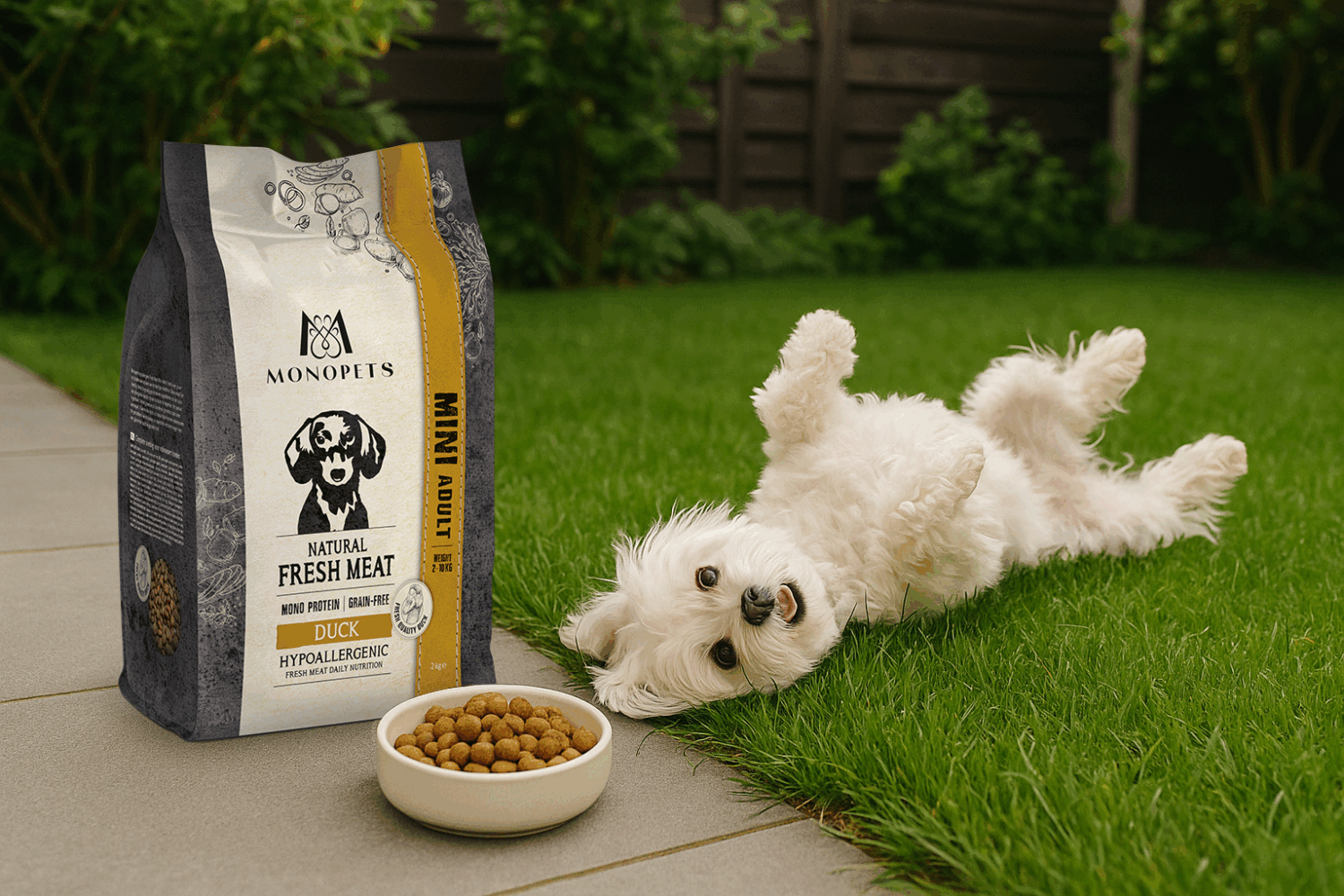
 Small dog (2 - 10 kg)
  Daily food